SEDA PURANATURAL COSMETICS
Request samples & offer
CollectionWholesalePrivate labelIngredientsJournalFAQAboutContactFace creamBody lotionShower gelShampooOlive oil soapGift setsRequest samples & offer
ENESDE
  1. Home
  2. Journal
  3. Olive oil soap: how is it made and what makes it different?
Journal · Ingredients · 7 min read

Olive oil soap: how is it made and what makes it different?

Olive oil soap is one of the oldest care products of the Mediterranean. How saponification works, what Castile, Marseille and Aleppo soap mean, and how to use and store a bar.

In brief

Olive oil soap is made by saponifying olive oil with lye; on the INCI list it appears as Sodium Olivate.

Castile, Marseille and Aleppo are traditional soap styles, not protected quality labels.

A bar lasts longer if it can dry between uses and is kept away from standing water.

What is olive oil soap?

Olive oil soap is soap whose fat base consists wholly or largely of olive oil. Through saponification, the oil becomes a cleansing agent that appears on the INCI list as Sodium Olivate (solid) or Potassium Olivate (liquid).

In the finished soap, the olive oil is no longer present as an oil but has been chemically converted. That is the key difference from creams and lotions, in which olive oil remains an oil. What olive oil does in caring formulas is covered in our guide to olive oil in skincare; this article is only about soap.

Many olive oil soaps also contain other oils, such as coconut or laurel berry oil, as well as glycerin, water and perhaps fragrance. The order on the ingredient list shows what dominates: ingredients above 1% are listed in descending order of concentration.

How is olive oil soap made?

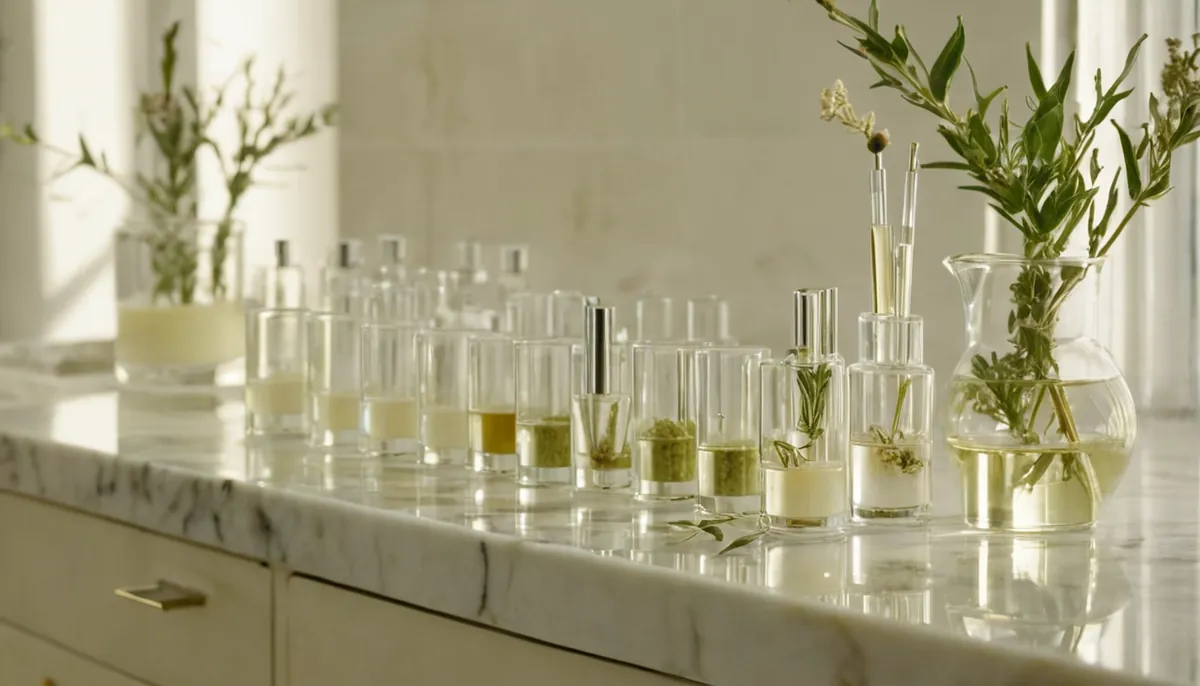
Olive oil is mixed with an alkaline solution, sodium hydroxide for bar soap. The fatty acids react with the lye to form soap and glycerin; this reaction is called saponification.

Two methods are common:

  • Cold process: oil and lye are mixed at moderate temperatures, poured into moulds and then left to mature.
  • Hot process: the mixture is heated so saponification is completed during production.

In a correctly calculated recipe, the lye is fully used up in the reaction, so no free lye remains in the finished soap. Many recipes deliberately use slightly more oil than the lye can saponify; this is known as ‘superfat’. Whether the glycerin stays in the soap depends on the process. Industrial soaps are also made from ready-made soap noodles.

What is the difference between Castile, Marseille and Aleppo soap?

All three are traditional soap styles with olive oil, named after their places of origin. Castile soap stands for soap with a very high olive oil content, Marseille soap for a French cauldron tradition, and Aleppo soap for a Syrian soap made from olive oil and laurel berry oil.

NameOrigin of the nameTypical features
Castile soapCastile, Spainolive oil as the main or sole oil; today also used for liquid soaps
Marseille soapMarseille, Francetraditionally boiled in cauldrons, mostly from olive oil; modern versions also use other plant oils
Aleppo soapAleppo, Syriaolive oil plus laurel berry oil (Laurus Nobilis Fruit Oil), long maturing

None of these names guarantees a particular recipe on its own. The INCI list shows which oils have actually been used.

Solid or liquid olive oil soap: what is the difference?

Bar soap is made with sodium hydroxide and is listed as Sodium Olivate; liquid soap is made with potassium hydroxide and is listed as Potassium Olivate. The base oil is the same; the type of lye determines the consistency.

Bar soap usually comes with little packaging and lasts a long time if stored correctly. Liquid soap is more hygienic for shared use, for example at a washbasin, and is easy to dose with a pump, but it contains a lot of water and therefore usually a preservative.

Liquid ‘Castile soap’ is often sold as a concentrate and diluted before use. Many modern shower gels, by contrast, are not soaps at all but are based on synthetic surfactants. The ingredient list tells you which is which.

Why does olive oil soap need time to mature?

After production, bar soap is left to mature for several weeks. During this time water evaporates, the bar becomes harder and more durable, and the soap structure settles.

Soaps with a high olive oil content are relatively soft at first and are therefore often left to mature for longer than soaps made with a blend of oils. How long depends on the recipe, the bar size and the manufacturer’s process; traditional Aleppo soaps, for example, mature for a particularly long time.

A well-matured bar wears down more slowly in use. Because a soap keeps losing a little moisture after maturing, the weight declared on the pack is planned together with the manufacturer.

What are the benefits of olive oil soap for face, body and hair?

Olive oil soap cleanses the skin and is valued by many people for its creamy, fine lather and its simple ingredient list. How it feels on your skin depends on the formula and your skin type; general promises of effect cannot be made.

Body and hands: the classic use. Lather, rinse well and apply a body lotion afterwards if you like.

Face: soap is alkaline, while the skin’s surface is slightly acidic. Some people use olive oil soap on their face without problems; others find it too tight. Try it on a small area first.

Hair: washing hair with soap often leaves it feeling rough or dull, especially with hard water. For daily hair washing, a shampoo made for it is usually the simpler choice.

For skin conditions, please ask a doctor for advice.

Is olive oil soap good for your face?

It can be, but it depends on your skin. Some people like olive oil soap as a simple face wash; others find it too cleansing and tight, or too rich. Try it on a small area first and apply a moisturiser afterwards.

Soap removes oil and dirt effectively. Many people with normal or oily skin find this pleasant, while dry or sensitive facial skin may feel tight afterwards. Others find soaps with a high share of unsaponified oil (superfat) too rich for the face.

  • Do a patch test first, for example along the jawline, over a few days.
  • Use lukewarm water, lather briefly and rinse thoroughly.
  • Pat your face dry and follow with a face cream.
  • If your skin feels tight, use soap less often or switch to a milder cleanser.

Olive oil soap is a cleansing product, not a treatment. If you have a skin condition such as acne or eczema, please ask a doctor or dermatologist for advice.

Does olive oil soap dry out your skin? Soap, syndet and pH

Not necessarily, but it can. True soap is alkaline, at around pH 9 to 10, while the skin’s surface is slightly acidic. Syndets and most shower gels are adjusted to a skin-neutral pH, which many people with dry skin find milder.

Soap is made by saponifying oils with lye, so it is alkaline by nature. The glycerin that forms during saponification stays in traditionally made soap and helps the skin feel soft after washing.

Syndets (synthetic detergents) and most shower gels are based on surfactants whose pH can be set to around 5.5, close to that of the skin.

SoapSyndet / shower gel
pHabout 9–10usually about 5–6
Glycerinforms during saponificationadded depending on the formula
Feel on dry skincan feel tightoften described as milder

Whether your skin feels dry also depends on your skin type, water hardness and how often you wash. A body lotion after showering helps to keep the skin supple.

How should retailers package and label olive oil soap?

In the EU, a soap for skin cleansing is a cosmetic product and needs the full labelling required by the Cosmetics Regulation. The packaging should also protect the bar from moisture without sealing it completely airtight.

The label must show, among other things: the name and address of the Responsible Person, the nominal quantity, the minimum durability date or PAO symbol, the batch number, the function where not obvious, precautions, and the ingredient list. Source: Regulation (EC) No 1223/2009, Article 19.

Paper wraps and cardboard boxes are common because the soap can continue to breathe. Shrink film offers more protection during transport but can trap moisture. Claims such as ‘mild’ must be supported by evidence. Our olive oil soap for retailers: packaging and labelling on request.

Last updated: October 2026This page provides general information on cosmetics and trade practice. It is not legal, tax or medical advice.

FAQ

Frequently asked questions

Does olive oil soap contain lye?

Lye is needed to make it, but in a correctly made soap it has fully reacted with the oil. The ingredient list may still name sodium hydroxide as a starting material.

How do I store olive oil soap so it lasts longer?

Keep the bar on a soap dish that drains well and let it dry between uses. Unused bars are best stored cool, dry and out of direct sunlight.

Why does pure olive oil soap lather less?

Olive oil produces a fine, creamy lather with small bubbles rather than large foam. That is why many recipes add oils such as coconut oil for more foam.

Is olive oil soap suitable for sensitive skin?

That depends on the formula and the individual skin, so no general promise can be made. Test it on a small area first, and ask a doctor if you have a skin condition.

Does olive oil soap go off?

Yes, soap can change over time, for example in smell or through orange spots, a sign that the oils are oxidising. Note the date or PAO symbol on the pack.

What does ‘Castile soap’ on a label mean?

It usually indicates a soap with a high olive oil content, but the term is not legally protected. Read the INCI list to see the oils actually used; our INCI guide explains how.

Is soap a cosmetic product under EU law?

Yes, if it is intended for cleansing the skin. It is then subject to the Cosmetics Regulation, including the safety assessment, the Responsible Person and the notification in the EU portal CPNP.

All questions

Contact

Begin with a sample

Tell us which products, quantities, sales channel and country you have in mind. We reply personally with questions or a proposal for samples.

Request samples & offer