SEDA PURANATURAL COSMETICS
Request samples & offer
CollectionWholesalePrivate labelIngredientsJournalFAQAboutContactFace creamBody lotionShower gelShampooOlive oil soapGift setsRequest samples & offer
ENESDE
  1. Home
  2. Journal
  3. Natural soap: what it is, what’s in it and how to choose
Journal · Ingredients · 7 min read

Natural soap: what it is, what’s in it and how to choose

‘Natural soap’ sounds clear, but it is not a protected term. This guide explains the usual ingredients, the main soap types and how to read a label – for face, body, hair and shaving.

In brief

‘Natural’ is not a legally defined term for cosmetics in the EU – the ingredient list tells you more than the name.

True soap is made by saponifying oils with lye; many ‘glycerin soaps’ are melt-and-pour bases with added ingredients.

Anyone who makes soap to sell must meet EU cosmetics law in full, including a safety assessment and a Responsible Person.

What makes a soap ‘natural’?

There is no legal definition of ‘natural’ for cosmetics in the EU. In practice, the word usually describes a soap made from plant oils with a short list of recognisable ingredients and no synthetic surfactants. Whether a product lives up to that is shown by its ingredient list, not by the front of the pack.

The EU Cosmetics Regulation (EC) No 1223/2009 does not define ‘natural’. Claims must still be truthful, supported and not misleading under Regulation (EU) No 655/2013, so a soap sold as natural should be able to justify the word.

Two reference points help to put the term into context:

  • ISO 16128 sets out how to calculate the share of natural and naturally derived ingredients in a formula. It is a calculation guideline, not a seal or a certification.
  • Private standards such as COSMOS or NATRUE define their own rules for natural and organic cosmetics and certify products that meet them.

Without either, ‘natural’ describes a concept rather than a checked standard. That is not a problem in itself – it simply means the label deserves a closer look.
What are the ingredients of a natural soap?

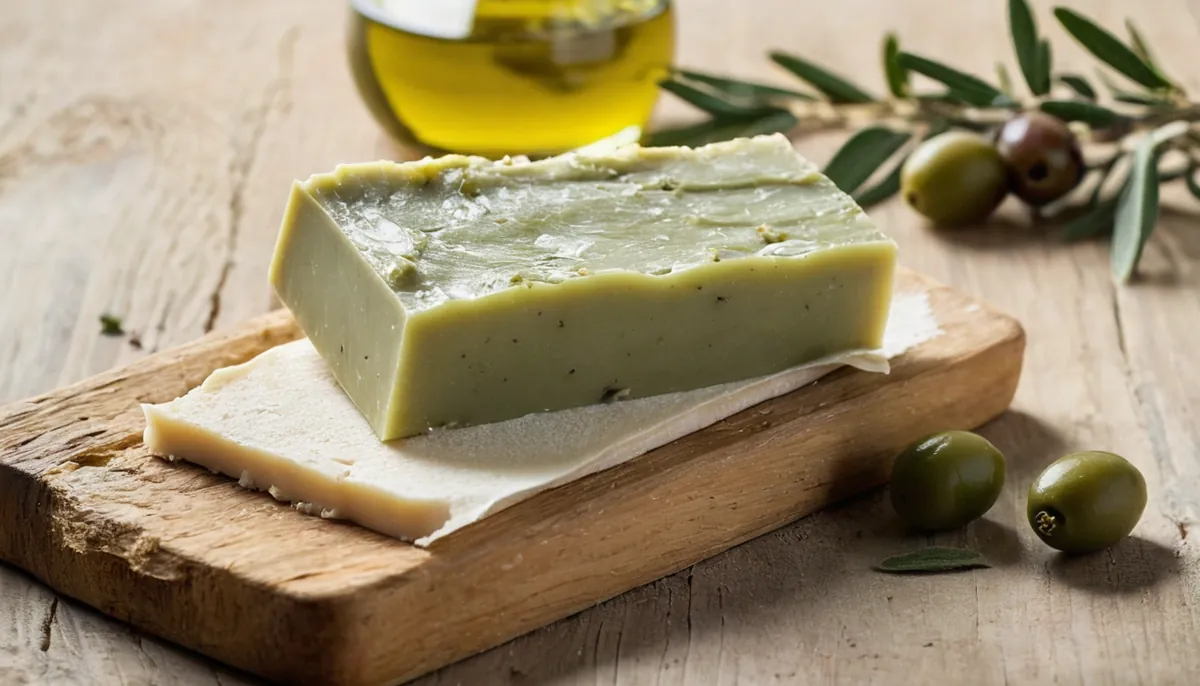
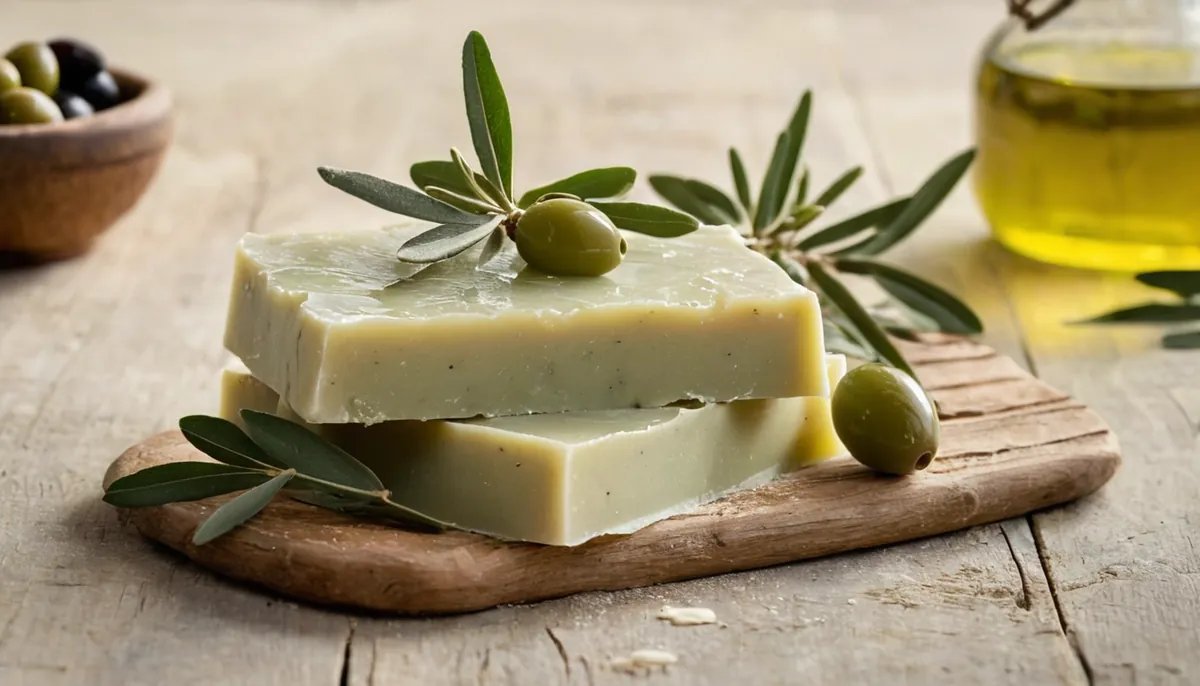
A classic soap is made from oils or fats, water and an alkali (lye). Saponification turns them into soap and glycerin; fragrance, botanical extracts or colourants may be added. On the label, the soap itself often appears as the sodium salts of the oils, such as Sodium Olivate.

Typical building blocks of natural soap bars:

  • Oils and butters: olive, coconut, shea, castor or palm oil. Each gives the bar different properties – coconut oil lathers quickly, olive oil gives a dense, mild-feeling lather.
  • Alkali: sodium hydroxide for bars, potassium hydroxide for soft and liquid soaps.
  • Water, most of which evaporates while the soap matures.
  • Optional additions: fragrance (‘Parfum’) or essential oils, plant extracts, clays, colourants such as iron oxides.

A label might read Sodium Olivate, Sodium Cocoate, Aqua, Glycerin, Parfum, Limonene. Fragrance allergens such as Limonene or Linalool must be named above set concentrations. How olive oil soap in particular is made, matured and classified is covered in our olive oil soap guide.

What is the difference between glycerin soap and saponified soap?

Saponified soap is made directly from oils and lye, and in many handmade bars the glycerin formed in the reaction stays in the soap. ‘Glycerin soap’ usually means a clear melt-and-pour base that, besides soap and glycerin, often contains sorbitol, propylene glycol or sometimes synthetic surfactants.

Glycerin is a natural by-product of saponification. In cold-process soap it remains in the bar; in some industrial production it is separated off and sold on.

Transparent glycerin soaps are a different product. To make them clear and meltable, manufacturers add ingredients such as sorbitol, propylene glycol, sugar or alcohol, and some bases also contain surfactants such as Sodium Laureth Sulfate. That does not make them bad, but it changes the character of a soap sold as ‘natural’.

Saponified soapGlycerin (melt-and-pour) soap
Made fromOils + lyeReady-made soap base
AppearanceUsually opaqueOften transparent
Typical extrasFragrance, plant extractsSorbitol, propylene glycol, sometimes surfactants

The INCI list shows which type you are holding.

Is natural soap good for your face and body?

Many people use a mild bar soap on face and body without any problem. Soap is alkaline, though, so dry or sensitive skin can feel tight afterwards, and a pH-balanced cleanser may suit it better. Applying a moisturiser after washing helps to keep the skin supple.

Whether soap feels drying depends on the skin, the water hardness and the formula. The alkaline pH of soap and how it reacts with hard water are explained in detail in our olive oil soap guide, so here are just the practical points:

  • Natural soap for face: lukewarm water, a little lather, rinse thoroughly and follow with a cream.
  • Body: a bar is an alternative to a natural shower gel. Both clean the skin; the choice is mostly about feel, scent and packaging.
  • Fragrance: unscented bars contain fewer potential allergens than heavily scented ones.

Cosmetics do not treat skin conditions. If you have eczema, acne or psoriasis, ask a doctor or pharmacist which cleanser is right for you.

Can you use natural soap as shampoo?

You can, and some people wash their hair with a soap-based hair bar. Real soap is alkaline, however, and with hard water it can leave a dull film on the hair. A shampoo formulated for hair is usually easier to get on with.

‘Natural soap and shampoo’ is a common search, and two different products sit behind it:

  • Soap-based hair bars are saponified oils, just like body soap. In soft water they can work well; in hard water insoluble calcium soaps form, which can make hair feel heavy and look dull. Some users follow with an acidic rinse, such as diluted cider vinegar.
  • Solid shampoo bars are often not soap at all but compressed mild surfactants such as Sodium Cocoyl Isethionate, with a pH closer to that of skin.

For regular hair washing, a liquid or solid natural shampoo made for the purpose is usually the more practical choice. 2-in-1 bars for body and hair exist, but they are a compromise for travel or camping rather than an everyday solution.

Is there a natural soap for men?

Soap itself has no gender: a bar marketed for men differs mainly in scent and sometimes in purpose, such as shaving or beard care. Woody, herbal or citrus scents are typical, while the base is the same as in any other soap.

Products sold as ‘natural soap for men’ usually differ in three ways:

  • Scent: rosemary, cedarwood, vetiver or citrus instead of floral notes. Unscented bars suit everyone.
  • Shaving soap: formulated for a dense, stable lather, often with stearic acid and a mix of sodium and potassium soaps. It is used with a brush and is not the same as a body bar.
  • Beard and body: a mild bar can clean the beard; a beard oil or a lotion afterwards keeps the skin underneath comfortable.

Soap is also a classic gift, often paired with a shower gel or body lotion – see our natural skincare gift sets.

Natural soap ‘without chemicals’: what should you look for when buying?

Everything is made of chemicals, including water, olive oil and soap itself, so ‘without chemicals’ cannot be literally true. The phrase usually stands for a short ingredient list without synthetic surfactants, preservatives or dyes. Whether that applies is shown by the INCI list.

Real soap cannot be made without lye: sodium or potassium hydroxide reacts with the oils and is used up in a correctly made bar. Phrases such as ‘chemical-free’ or ‘no additives’ are marketing language, not a legal category.

More useful questions when buying natural soap bars:

  • Is it saponified soap (Sodium Olivate, Sodium Cocoate …) or a base with synthetic surfactants?
  • Does it contain fragrance (‘Parfum’), and which allergens are declared?
  • Are there colourants (CI numbers) or preservatives?
  • Are the manufacturer’s or Responsible Person’s name and address on the pack?

Specific ‘free from’ statements such as ‘without fragrance’ are helpful when they are true and do not disparage other products. Our guide to reading an INCI list explains the order and names on the label.

Making natural soap at home: what should you know?

Soap-making uses sodium hydroxide, which is corrosive and can cause severe burns and eye damage, so goggles, gloves and good ventilation are essential. If you want to sell your soap, it is a cosmetic product under EU law, with obligations such as a safety assessment.

We do not publish recipes, but two points are worth knowing before you start:

  • Safety: a lye solution heats up strongly, gives off fumes and must be kept away from children and pets. Fresh soap is still caustic and needs several weeks to mature before use.
  • Selling: handmade soap sold in the EU must comply with Regulation (EC) No 1223/2009 – a Responsible Person, a cosmetic product safety report by a qualified assessor, notification in the CPNP portal, good manufacturing practice and complete labelling. This applies to small makers too.

If you want soap under your own brand without your own production, you can work with an established manufacturer instead. Seda Pura offers olive oil soap for wholesale and private label; details are provided on request.

Last updated: October 2026This page provides general information on cosmetics and trade practice. It is not legal, tax or medical advice.

FAQ

Frequently asked questions

How should I store a natural soap bar?

Keep it on a draining soap dish, out of the direct stream of water. A bar that can dry out between uses stays firm and lasts noticeably longer.

Is liquid natural soap the same as a bar?

Not quite. Real liquid soap is made with potassium hydroxide and appears on the label as potassium salts, such as Potassium Olivate. Many liquid ‘soaps’ are in fact surfactant-based cleansers, similar to a shower gel.

Why does handmade soap sometimes have a white film?

Often it is soda ash, a white layer that can form on the surface of fresh soap through contact with air. It is a cosmetic flaw that washes off with the first uses.

Does natural soap go off?

Soap keeps well, but the oils in it can oxidise over time, which shows as orange spots or a rancid smell. Store bars cool and dry, and use them within the period stated on the pack.

Is natural soap suitable for children?

Mild, unscented soaps are commonly used for children. For babies and for children with sensitive skin, ask a paediatrician or pharmacist which cleanser is suitable.

What do CI numbers on a soap label mean?

They identify colourants according to the Colour Index system. CI 77491, for example, stands for a red iron oxide. Uncoloured soaps have no CI numbers.

Can I buy Seda Pura soap as a consumer?

Seda Pura currently works with retailers, distributors and brands. An online shop for consumers is planned; until then, trade customers can request samples and an offer.

Is natural soap suitable for eczema?

Soap is not a treatment for eczema. Because soap is alkaline, many people with eczema or very dry skin are advised to use mild, fragrance-free cleansers; follow the advice of your doctor or dermatologist.

Which natural soap is good for women – and for men?

Skin type matters more than gender. Dry skin usually prefers a soap with a higher superfat and no or little fragrance; oily skin often tolerates a classic olive oil soap well. Our guide to skin types helps you choose.

What are natural soap flakes and soap powder?

Soap flakes are grated or planed bar soap; soap powder is soap ground finely. Both are mainly used for laundry or cleaning, not as a facial cleanser. An olive oil bar can be grated into flakes for hand washing delicates.

What are soap nuts and the soap tree?

Soap nuts are the dried fruit shells of the soapberry tree (Sapindus). They contain saponins that foam in water and are mainly used for laundry. They are not soap in the chemical sense, which is made from oils and lye.

Is there natural soap for a dispenser?

A dispenser needs liquid soap, which is made with potassium hydroxide instead of sodium hydroxide, or a liquid cleanser such as a shower gel. Bar soap cannot simply be dissolved into a stable liquid soap.

All questions

Contact

Begin with a sample

Tell us which products, quantities, sales channel and country you have in mind. We reply personally with questions or a proposal for samples.

Request samples & offer