SEDA PURANATURAL COSMETICS
Request samples & offer
CollectionWholesalePrivate labelIngredientsJournalFAQAboutContactFace creamBody lotionShower gelShampooOlive oil soapGift setsRequest samples & offer
ENESDE
  1. Home
  2. Journal
  3. Homemade natural cosmetics: DIY skincare and natural soap recipes done safely
Journal · Skincare · 9 min read

Homemade natural cosmetics: DIY skincare and natural soap recipes done safely

Making your own soap, balm or body lotion is rewarding – as long as hygiene, preservation and lye safety are taken seriously. A practical guide to the basics, the most common mistakes and the legal line between a hobby and a product for sale.

In brief

Water-based homemade products such as lotions can spoil within days without a preservative; anhydrous balms and oils keep longer.

Soap is always made with lye (sodium hydroxide): goggles, gloves, a soap calculator and a cure of usually 4–6 weeks are part of every recipe.

Making cosmetics for yourself is a hobby; anyone who sells them needs a safety assessment, a responsible person and a CPNP notification under Regulation (EC) No 1223/2009.

DIY natural skincare: what should you know before you start?

Homemade cosmetics are not difficult, but they follow the same rules as any formula: clean tools, exact weights, suitable ingredients and an honest view of shelf life. The simplest projects contain no water – oils, balms and soap – while creams and lotions are much more demanding.

A good way to plan a first project is to sort recipes by risk:

  • Low effort: body oils, lip balms, bath salts and solid balms – no water, no emulsifier, short ingredient lists.
  • Medium effort: melt-and-pour soap, where a ready-made soap base is melted, scented and poured – no handling of lye.
  • High effort: cold-process soap with lye, and creams or lotions that combine water and oil and need an emulsifier and a preservative.

Work with a digital scale that shows at least whole grams (better 0.1 g for small amounts), write down every recipe and every batch, and label each jar with its contents and the date. Knowing what an ingredient does helps more than any recipe: our guide to reading INCI lists explains the usual names and functions.
Hygiene: how do you keep homemade cosmetics clean?

Clean the work surface, wash your hands, wear gloves and disinfect tools and containers – for example with 70 % alcohol – and let them dry completely. Use boiled or distilled water, never tap water straight from the tap, and make small batches.

Microorganisms are the main risk of homemade skincare. Bacteria, yeasts and moulds are invisible at first and only show up as a smell, discolouration or spots once a product is already heavily contaminated. Practical rules from small-scale production:

  • Work in a clean kitchen without food preparation going on at the same time; tie back long hair.
  • Keep spatulas, beakers and jars only for cosmetics, and disinfect them before each use.
  • Pump dispensers and tubes are more hygienic than open jars, because fingers don’t touch the product.
  • Use fresh raw materials within their best-before date and store them closed, cool and dark.

In industrial production these principles are formalised as Good Manufacturing Practice (ISO 22716), which the EU Cosmetics Regulation requires for every product on the market.

Homemade body lotion: why do water-based recipes spoil so quickly?

Water is where microorganisms grow. A homemade body lotion or cream without an effective preservative can be contaminated within a few days, even if it still looks and smells fine. Without a preservative, keep it in the fridge, make tiny batches and use them up within about a week.

A lotion is an emulsion: a water phase and an oil phase are heated, combined with an emulsifier and stirred until cool. It is precisely this mix of water, nutrients from plant extracts and warmth that suits germs. Commercial lotions are therefore preserved and tested for microbial stability before they are sold.

Some common misconceptions:

  • Vitamin E (Tocopherol) is an antioxidant: it slows down oils going rancid, but it does not stop bacteria or mould.
  • Essential oils or grapefruit seed extract are not a reliable replacement for a tested preservative.
  • Anhydrous products – oils, balms, butters – need no preservative as long as no water gets in, but oils oxidise over time and start to smell rancid.

If you prefer not to work with preservatives, stay with water-free recipes. How a finished lotion is built is described on our body lotion page.

Homemade natural soap: how does saponification work?

Real soap is always made with lye. Oils and fats react with sodium hydroxide (NaOH) to form soap and glycerin – this reaction is called saponification. In the finished, cured bar no free lye remains if the recipe was calculated correctly.

Every oil needs a specific amount of lye to saponify completely; this is its saponification value. A soap calculator (several are freely available online) works out the exact amount of sodium hydroxide and water from the oils you choose. Recipes are usually calculated with a superfat of around 5–8 %: a small share of the oil stays unsaponified, makes the bar milder and provides a safety margin.

Sodium hydroxide is corrosive. These rules are not optional:

  • Wear safety goggles, gloves and long sleeves; keep children and pets out of the room.
  • Always add the lye granules to the cold water, never the other way round – the solution gets very hot and gives off fumes, so work by an open window.
  • Use stainless steel, heat-resistant plastic (PP) or glass; aluminium reacts with lye.
  • Don’t ‘neutralise’ splashes on the skin with vinegar – rinse with plenty of water, and see a doctor if lye gets into your eyes.

More on the chemistry and on the difference between real soap and syndet bars: our guide to natural soap.

Natural soap recipes: a basic olive oil soap step by step

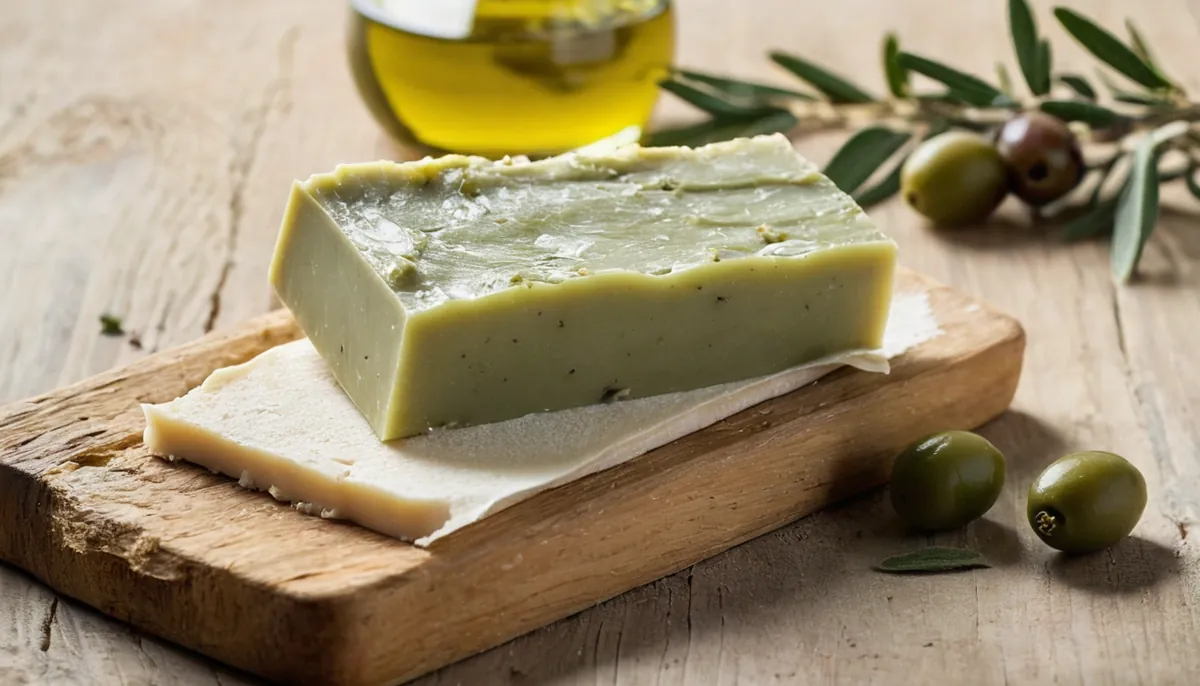
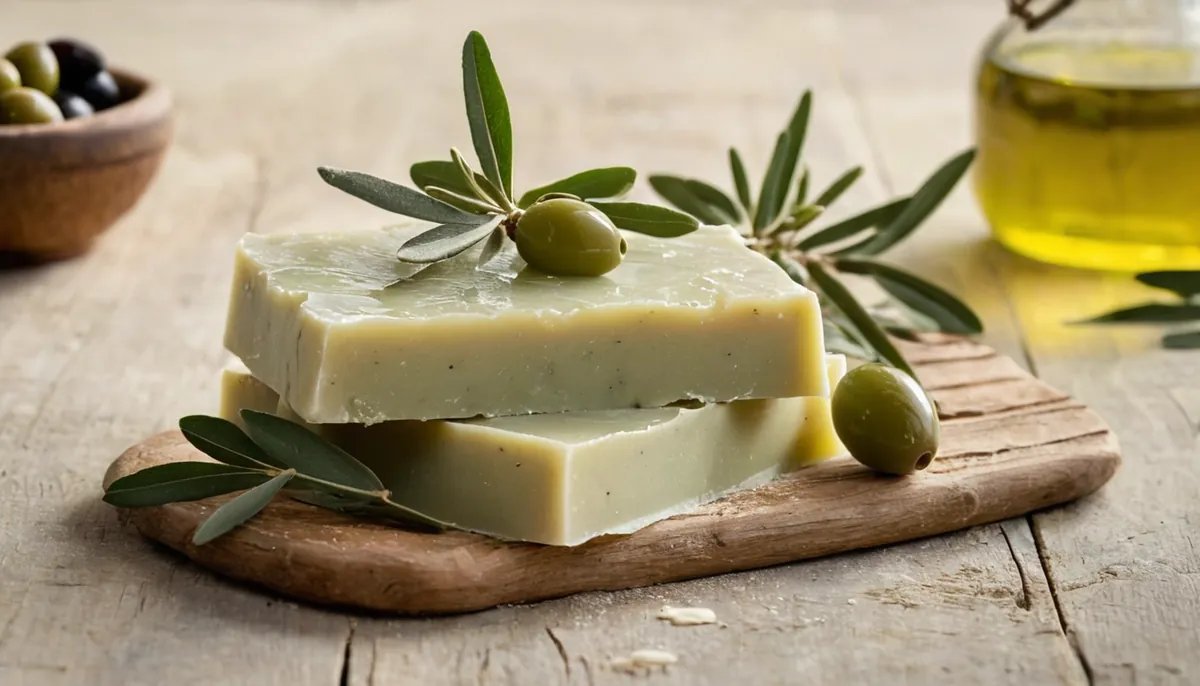
A classic beginner’s recipe is a pure olive oil soap (Castile soap). Weigh the oil, calculate lye and water with a soap calculator using a superfat of about 5–8 %, mix the cooled lye into the oil until the mixture thickens (‘trace’), pour it into a mould and let the cut bars cure for at least 4–6 weeks.

The principle, without exact quantities – these always come from the soap calculator for your oil and your batch size:

  1. Prepare: protective gear, scale, stainless steel pot, stick blender, mould lined with baking paper or made of silicone.
  2. Lye: weigh water and sodium hydroxide separately, stir the NaOH into the water, let the solution cool.
  3. Oils: weigh the olive oil and warm it gently if needed.
  4. Mix: pour the lye into the oil and blend in short bursts until it reaches a pudding-like trace. Pure olive oil soap can take a while to get there.
  5. Mould: pour, cover and leave for 1–3 days until firm enough to cut.
  6. Cure: store the bars on a rack in a dry, airy place for at least 4–6 weeks; pure olive oil soap often benefits from several months and becomes harder and milder.

Many natural soap recipes add coconut oil for more lather or shea butter for a firmer bar – every change of oil means a new calculation. Why olive oil soap has such a long tradition in Andalusia is explained in our guide to olive oil soap.

Natural soap colorants: clays, herbal powders – and what counts as a colourant?

Popular natural soap colorants are clays, plant powders and spices: kaolin for cream, red or green clay, spirulina or nettle powder for green, madder root for pink, activated charcoal for grey to black. For your own use you can experiment freely; for products on the market, anything used mainly to colour must be a permitted colourant from Annex IV of the EU Cosmetics Regulation.

Practical tips for colouring with natural ingredients:

  • Start with small amounts, roughly half a teaspoon per kilogram of oil, and mix powders with a little oil first to avoid lumps.
  • Many plant colours change in the alkaline soap batter or fade in daylight – green often turns brown.
  • Rough powders such as ground herbs or coffee act as a gentle scrub; use them sparingly in facial soap.
  • Petals in the batter usually turn brown; on the surface they look better, but may discolour as well.

Legally, the purpose decides: a substance that is used mainly to colour is a colourant under Regulation (EC) No 1223/2009, whether it is synthetic or natural. Only colourants listed in Annex IV may be used in products on the market, and they appear in the ingredient list with their CI number – iron oxides in coloured clays, for example, as CI 77491 or CI 77499. A plant powder added mainly as a botanical ingredient is declared under its INCI name instead.

Essential oils in homemade cosmetics: allergens and the patch test

Essential oils are concentrated and contain fragrance allergens such as limonene, linalool, geraniol or citral. Never use them undiluted on the skin, keep doses low, avoid certain oils during pregnancy and with children, and test every new product on a small area of skin first.

‘Natural’ does not mean ‘free of allergens’: lavender, citrus, rose or tea tree oil are some of the most frequent triggers of contact allergies to fragrance. In commercial products the EU requires named allergens to be listed on the label above a threshold of 0.001 % in leave-on and 0.01 % in rinse-off products; since Regulation (EU) 2023/1545 the list has grown considerably.

A simple patch test for home use:

  1. Apply a small amount to the inside of the forearm or the crook of the elbow.
  2. Leave it on and don’t wash the area for 24–48 hours.
  3. Redness, itching, swelling or burning: wash off, don’t use the product.

Cold-pressed citrus oils such as bergamot can make the skin more sensitive to sunlight; avoid them in products you leave on before going into the sun. Sensitive skin is usually better off with fragrance-free recipes – see also our guide to skin types.

Natural soap dish and storage: how do you make a bar last?

A natural soap dish should let water drain away and air reach the bar from below – wooden slats, a ceramic dish with holes or a stone with grooves all work. A bar that stays dry between uses lasts much longer and doesn’t turn soft or slimy.

Handmade soap often contains more glycerin and unsaponified oil than industrial soap, which makes it milder but also more sensitive to standing water. A few habits help:

  • Keep the soap away from the shower stream, and let it dry between uses.
  • Cut large bars into smaller pieces and use one at a time.
  • Store spare bars in a dry, cool, dark place, ideally in paper or a cardboard box rather than airtight plastic.
  • Wooden soap dishes should be untreated or oiled and dry out completely now and then.

Orange spots on a homemade bar (‘dreaded orange spots’) are usually rancid oil. The bar can still be used if it smells fine, but it is a sign of a too-high superfat, old oils or too much humidity in storage.

Can you sell homemade cosmetics? What EU law requires

Making soap or creams for yourself and your family is a private hobby. As soon as you sell them – online, at a craft market or in a shop – they are cosmetic products under Regulation (EC) No 1223/2009, with the same obligations as any brand.

Before a cosmetic product may be placed on the EU market, in short:

  • a responsible person in the EU who is accountable for compliance (Art. 4–5),
  • a safety assessment by a qualified safety assessor and a product information file (Art. 10–11, Annex I),
  • production according to Good Manufacturing Practice (Art. 8),
  • notification in the CPNP, the EU’s cosmetic products portal (Art. 13),
  • correct labelling with ingredient list, batch number, durability and the address of the responsible person (Art. 19),
  • advertising claims that comply with Regulation (EU) No 655/2013.

For a small series this is often more effort than the soap itself. If you want to launch your own natural care line, working with a manufacturer is usually the faster route: with Seda Pura private label the formula, safety documentation and production come from an existing setup, and retailers can order finished products through wholesale. The legal framework in detail: our guide to EU cosmetics regulation.

Last updated: October 2026This page provides general information on cosmetics and trade practice. It is not legal, tax or medical advice.

FAQ

Frequently asked questions

Is a natural soap kit a good way to start?

For melt-and-pour soap, yes: a natural soap kit with a soap base, moulds and colours lets you try shapes and scents without handling lye. Kits for cold-process soap only make sense together with safety goggles, gloves and a soap calculator. Check the ingredient list of the soap base – ‘natural’ is not a protected term.

Is there a natural skincare course or PDF you can recommend?

Seda Pura does not offer courses or PDFs. When choosing a natural skincare course, look for one that covers lye safety, hygiene, preservation and the legal rules for selling, not just recipes. Adult education centres and soap-making associations often run practical beginners’ courses.

How long does homemade natural soap need to cure?

Usually 4–6 weeks in a dry, airy place, turned now and then. During this time water evaporates and the bar becomes harder and milder. Pure olive oil soap often benefits from a longer cure of several months.

Can you make soap without lye?

No. Every real soap is made with lye; a soap without lye would just be oil. With melt-and-pour soap, the saponification has already been done by the manufacturer, so you don’t handle lye yourself. Syndet bars are not soap but solid washing products based on synthetic surfactants.

Can I make a homemade body lotion without preservatives?

Only if you treat it like fresh food: tiny batch, fridge, used up within about a week, and thrown away at any change in smell or appearance. For longer use, either work with a suitable broad-spectrum preservative or switch to a water-free body oil or balm.

How long do homemade cosmetics keep?

It depends on the water content. Unpreserved lotions and creams: a few days in the fridge. Oils and balms: several months, limited by the shelf life of the oils. Cured soap: usually a year or more, if it is stored dry. Label every product with the date of manufacture.

Which natural soap colorants are easiest for beginners?

Clays such as kaolin, red or green clay are the easiest: they are stable in soap, don’t fade much and give soft, earthy tones. Activated charcoal gives grey to black. Plant powders like spirulina or nettle are more likely to change colour during curing.

Do I really need a soap calculator for natural soap recipes?

Yes. Every oil needs a different amount of lye, and even a recipe you found online must be recalculated if you change an oil or the batch size. Too little lye leaves a greasy, quickly rancid bar; too much lye makes it harsh on the skin.

What makes a good natural soap dish?

One that keeps the bar dry: slats, holes or grooves that let water drain and air circulate. Wood, ceramic, stone or loofah pads all work. Place it outside the shower stream and clean it now and then.

Can I give homemade soap as a gift?

Giving soap to friends and family privately is not selling. Label it with the ingredients and the date anyway, and mention essential oils, so that people with allergies can decide for themselves. If you prefer a ready-made gift, see our gift sets.

Does Seda Pura sell DIY kits?

No. Seda Pura makes finished care products – such as olive oil soap – and manufactures natural cosmetics for other brands as private label. Questions about formulas or a project of your own: get in touch.

All questions

Contact

Begin with a sample

Tell us which products, quantities, sales channel and country you have in mind. We reply personally with questions or a proposal for samples.

Request samples & offer